


Clad Rack Warehouse: Structure, Benefits & Storage System Guide
 2026.06.23
 Balita sa Industriya
What Is a Clad Rack Warehouse and How Does It Work
Most warehouses follow a predictable sequence: build the structure, then install the racks inside. A clad rack warehouse reverses that logic entirely. Here, the racking system itself forms the primary load-bearing framework of the building — the uprights, beams, and bracing that hold your inventory also support the walls, roof cladding, and all external forces acting on the facility.
This integration eliminates the need for a separate steel skeleton. Instead of erecting traditional columns and trusses first, construction begins with the racking, and the building envelope — wall panels and roofing — is attached directly to that structure. The result is a single, unified system where storage hardware and architectural structure are one and the same.
Because the racks carry both product loads and environmental forces (wind pressure, snow weight, seismic loads), the civil engineering scope shrinks dramatically. No load-redistribution footings for interior columns, no gap between rack tops and roof trusses wasting cubic meters of space. The warehouse is designed around the racking, not the other way around.
Key Structural Advantages Over Conventional Warehouses
The differences between a clad rack building and a traditionally constructed warehouse go well beyond aesthetics. They affect build timelines, project economics, and long-term operational flexibility in measurable ways.
| Factor | Clad Rack Warehouse | Conventional Warehouse |
|---|---|---|
| Civil Engineering Scope | Minimal — slab + perimeter only | Extensive — full structural frame required |
| Maximum Height | Up to 45 m (limited by local code) | Typically under 20 m |
| Construction Timeline | Shorter — racking and cladding built concurrently | Longer — sequential build phases |
| Interior Columns | None — full floor space utilization | Present — restrict layout flexibility |
| Upfront Cost | Lower for equivalent storage volume | Higher — separate structural and storage spend |
| Demountability | High — bolted rack components recoverable | Low — conventional construction is permanent |
Height is where the cost argument becomes most compelling. Clad rack buildings regularly reach 40–45 meters, heights that would require prohibitively expensive structural steelwork in a conventional build. By exploiting vertical space this aggressively, operators dramatically increase pallet positions per square meter of land — a critical advantage where real estate costs are high or site footprints are constrained.
The concurrent construction method also compresses project timelines. Because racking assembly and envelope installation happen in parallel rather than in sequence, facilities come online faster — reducing the carrying cost of unused capital and accelerating the return on investment.
Types of Storage Systems Used in Clad Rack Buildings
One of the less-appreciated aspects of clad rack construction is its versatility. The structural approach does not lock operators into a single racking format — it accommodates a spectrum of storage configurations depending on throughput requirements, product characteristics, and the degree of automation desired.
- Conventional pallet racking (single- or double-deep): Standard selective racking is the most common configuration for facilities between 12 and 20 meters. It provides direct access to every pallet position and pairs naturally with counterbalance or reach forklifts.
- Drive-in / drive-through racking: High-density compact systems suited for large quantities of homogeneous products. Forklifts enter the racking lanes directly, eliminating pick aisles and maximizing storage density at the cost of LIFO or FIFO selectivity.
- Push-back and pallet shuttle systems: Dynamic storage solutions for medium-density applications. Pallet shuttle systems in particular work well in temperature-controlled clad rack environments where minimizing door openings is operationally important.
- Automated Storage and Retrieval Systems (AS/RS): The preferred configuration for facilities exceeding 15–20 meters. Stacker cranes and miniloads operate within very narrow aisles at heights no manual equipment can safely reach, delivering maximum volumetric efficiency.
| Storage System | Typical Height Range | Automation Level | Best For |
|---|---|---|---|
| Conventional Pallet Racking | Up to ~20 m | Manual | Mixed SKUs, frequent access |
| Drive-In / Drive-Through | Up to ~15 m | Manual | High-volume homogeneous goods |
| Pallet Shuttle | 10–20 m | Semi-automated | Cold storage, FIFO/LIFO flexibility |
| AS/RS with Stacker Cranes | 15–45 m | Fully automated | High throughput, maximum vertical use |
Automation Integration: How AS/RS Elevates Clad Rack Performance
Automation and clad rack construction are a natural pairing. The structural rigidity of a rack-supported building — no deflecting intermediate columns, precisely engineered aisle geometries — creates ideal operating conditions for stacker cranes and automated guided vehicles (AGVs) that require super-flat floors and consistent vertical tolerances to operate safely at extreme heights.
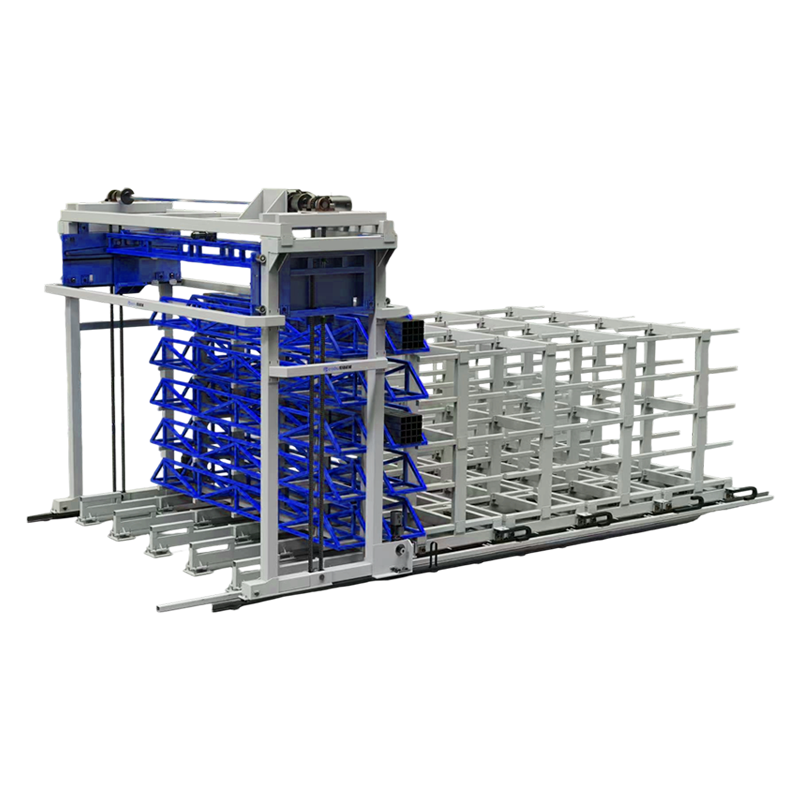
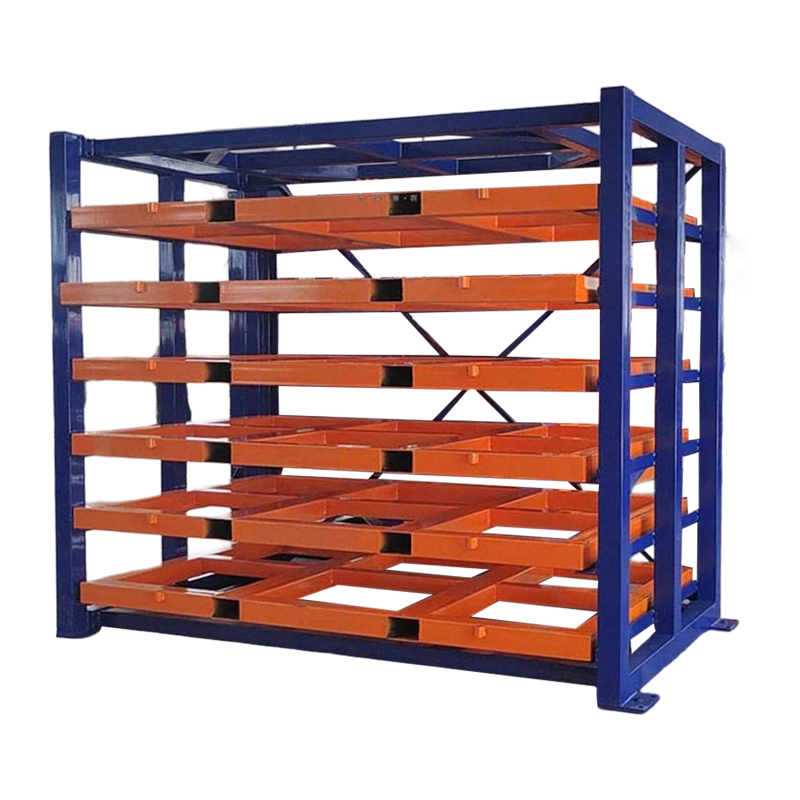
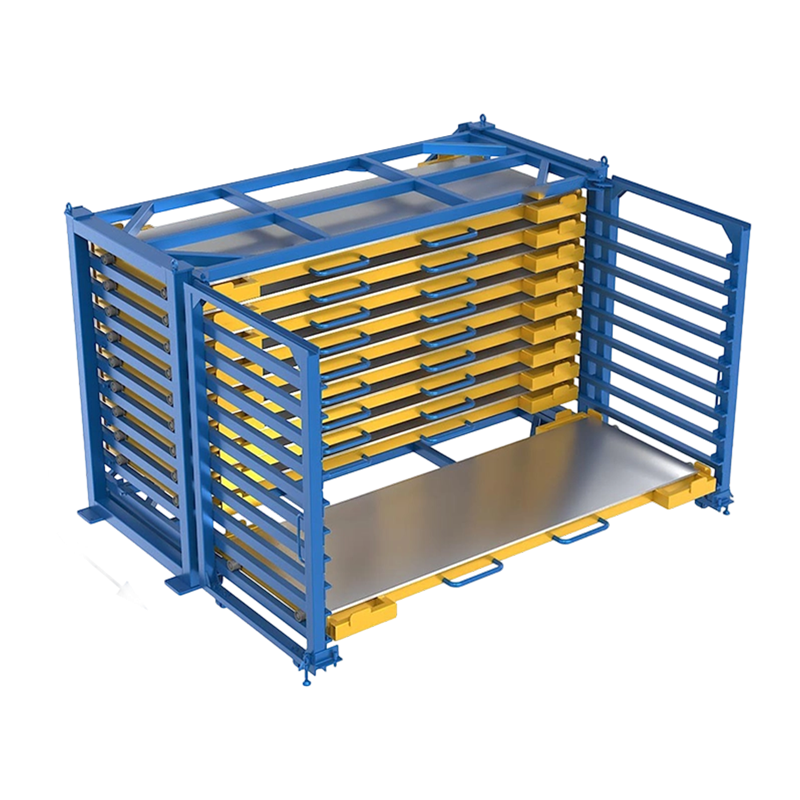
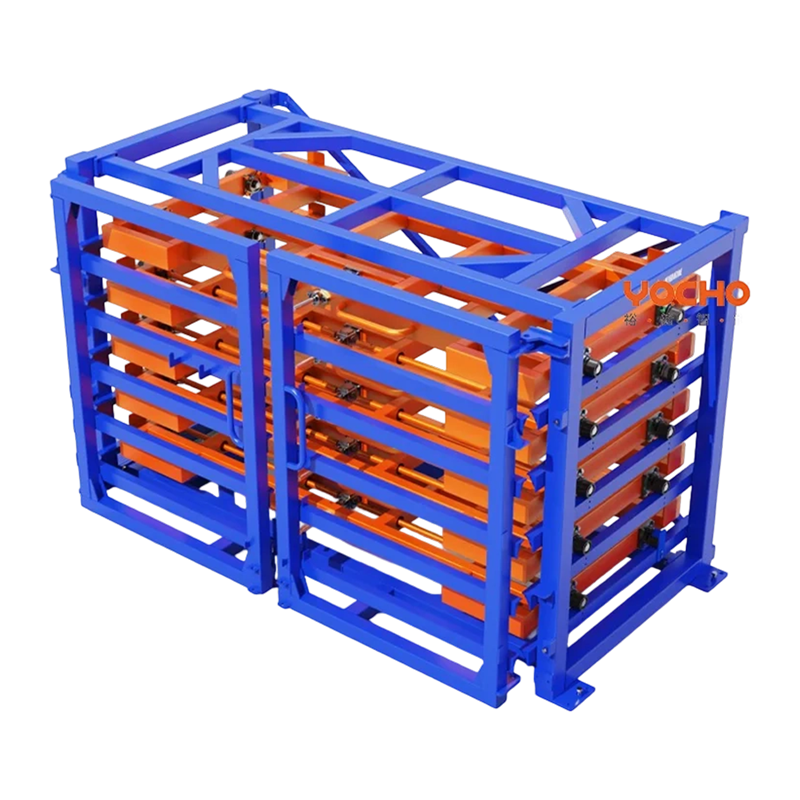
For metal storage applications specifically, the integration of AS/RS within a clad rack structure unlocks capabilities that manual systems simply cannot match. automated storage systems for sheet metal plates with PLC-controlled retrieval can be incorporated directly into the racking framework, enabling precise extraction of heavy plate stock without manual handling exposure. Similarly, automated storage systems for long materials such as pipes and profiles leverage the unobstructed vertical depth of clad rack bays to store extended stock efficiently — something a conventional warehouse with intermediate columns cannot replicate.
For facilities handling composite plate stock and requiring coordinated loading and unloading sequences, automatic composite loading and unloading plate warehouse solutions integrate conveyor feeds and automated cranes within the clad rack bay structure — consolidating material flow into a single, space-optimized system.
Volumetric efficiency gains with AS/RS in a clad rack configuration typically exceed 85%, compared to 50–60% in conventional manually operated facilities. The combination of zero-dead-space vertical stacking, narrowed aisles, and continuous automated cycling produces throughput rates that justify the capital investment in high-volume industrial operations.
Safety Standards and Structural Requirements
A clad rack warehouse carries the structural obligations of both a storage system and a building. Designing one requires satisfying two parallel regulatory frameworks simultaneously — rack engineering standards and the construction codes applicable to the facility's geographic location.
On the structural side, every clad rack building must be engineered to resist the full range of environmental loads for its installation site: wind pressure on the large facade surfaces, roof overloads from snow accumulation, and seismic forces in earthquake-prone regions. The connections between horizontal bracing members, upright frames, and cladding rails are not standard rack components — they are custom-engineered joints designed to handle cyclical dynamic loading over the facility's operational life.
Thermal expansion is a frequently underestimated design consideration. A steel structure rising 40 meters will move several centimeters across a daily temperature cycle. The wall and roof cladding system must absorb this movement without tearing weather seals or transmitting stress back into the racking structure. This is addressed through purpose-designed expansion joints and sliding cladding fixings.
For operations in the United States, OSHA's materials handling and storage standards under 29 CFR 1910.176 establish baseline requirements for aisle clearances, load-bearing limits, and equipment operation within storage facilities. Compliance is non-negotiable and informs both rack configuration and floor slab design. Beyond OSHA, the ANSI MH16.1 specification governs the design, testing, and utilization of industrial steel storage racks — a standard that applies directly to clad rack structures and specifies load testing protocols, safety factors, and inspection requirements.
Foundation engineering is equally critical. Because clad rack uprights transmit concentrated point loads to a relatively small footprint, the floor slab must be designed to distribute those loads without differential settlement. A flatness tolerance of just a few millimeters across a 100-meter aisle is a practical prerequisite for safe stacker crane operation.
Is a Clad Rack Warehouse Right for Your Facility?
Clad rack construction is not a universal solution — it is a high-performance option that pays off most clearly in specific operational conditions. Understanding where those conditions apply helps decision-makers evaluate whether the investment makes sense.
The economics of clad rack strongly favor facilities where planned storage height exceeds 12 meters. Below that threshold, the cost savings over a conventional build narrow considerably, and standard warehouse construction may remain competitive. At heights above 15–20 meters, and especially where automated retrieval systems are intended, clad rack becomes the clearly superior option both technically and financially.
The following scenarios are where clad rack warehouse solutions deliver the clearest return:
- High-volume metal storage operations handling sheet material, coils, pipes, or structural profiles that require organized vertical staging with fast retrieval cycles
- Cold storage and freezer applications where minimizing the building envelope area (and therefore heat infiltration) is a design priority — clad rack's compact, column-free interior is inherently suited to temperature-controlled environments
- Land-constrained sites where maximizing pallet positions per square meter of ground footprint is essential to site viability
- Facilities requiring fast deployment — new distribution centers, expansion of existing operations, or temporary high-capacity storage where the concurrent build process delivers earlier operational readiness
- Operations planning for AS/RS integration from the outset, where the precision geometry of clad rack construction aligns with automated equipment tolerances
For facilities that check multiple boxes on this list, a clad rack warehouse is not simply a storage system — it is a purpose-built logistics asset designed to perform at the intersection of structural engineering and operational efficiency.

Kung interesado ka sa aming mga produkto, mangyaring kumonsulta sa amin
MGA PRODUKTO
MABILIS NA LINK
NEWS CENTER
MOBILE TERMINAL

CONTACT US
- ADDRESS: Room 205, Office Building, Shandong Yurui Machinery Group Co., Ltd., sa intersection ng Banqiao Road at Huangjin Road, Pingyi Street, Pingyi County, Linyi City, Shandong Province.
- TELEPONO: +86-19819101584
- EMAIL: [email protected]
Linyi Yocho Storage Intelligent Manufacturing Co.,Ltd. LAHAT NG KARAPATAN. RESERVED NA LAHAT. Mga Manufacturer ng Warehouse Rack Pabrika ng mga istante ng bodega
